Welcome to the Institute of Veterinary Anatomy of the University of Zurich
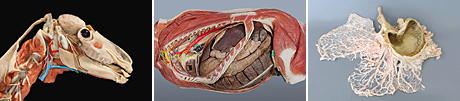
The Institute of Veterinary Anatomy represents macroscopic and microscopic anatomy as well as embryology and developmental biology of domestic mammals in teaching and research.
A particular research focus lies on the comparative and species-specific aspects of reproductive biology and endocrinology in domestic mammals. Through this, the institute makes a significant contribution to understanding key biological processes, including embryo-maternal communication, placental function, and the mechanisms of birth induction.
In teaching, the institute plays a vital role in veterinary education. During the first year of study, it provides foundational anatomical knowledge, which serves as an indispensable basis for understanding the structure and function of animal organisms. This knowledge is systematically expanded and deepened during the second, third, and fourth years of study through block courses. Special emphasis is placed on connecting theory with practice, enabling students to be thoroughly prepared for the diverse clinical demands of veterinary medicine.
UZH Institute of Veterinary Anatomy: Animal Anatomy: Clear, Accessible, Innovative, and Up-to-Date
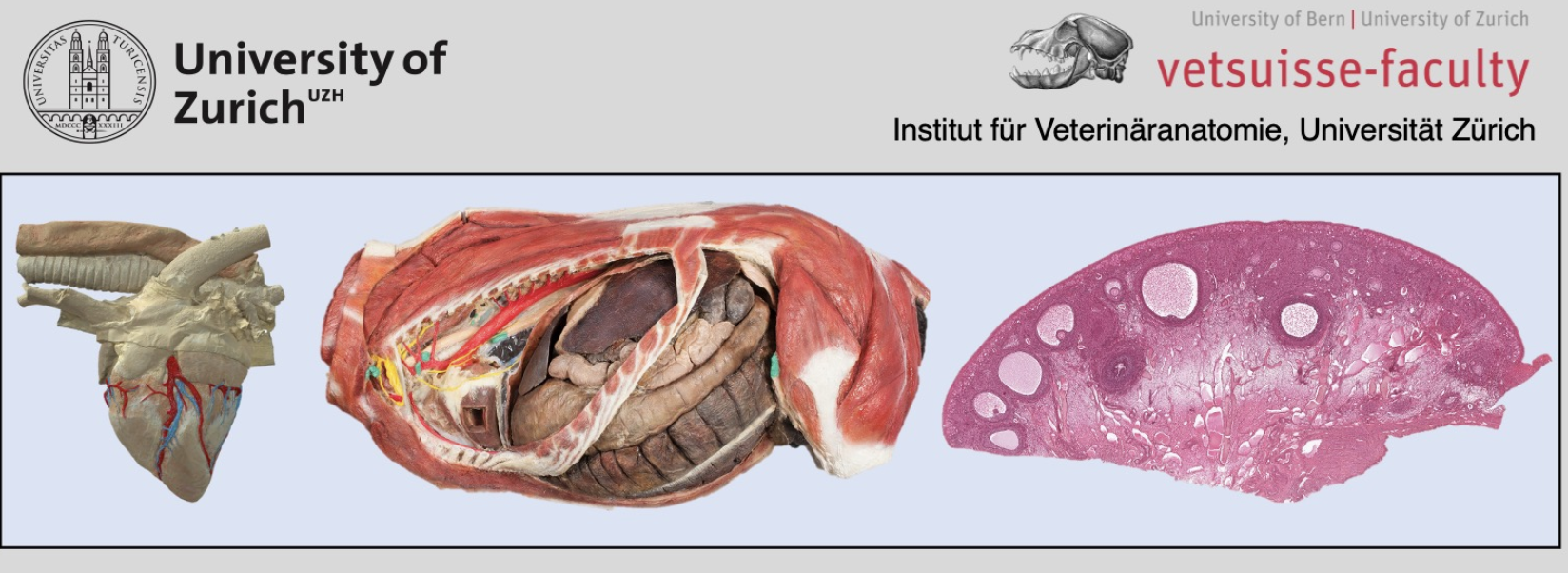
Anatomy: visual, accessible, innovative, and modern
As part of the “3Rs and Animal Welfare” initiative, we here offer guided group tours at the Institute of Veterinary Anatomy. Visitors gain exciting insights into modern veterinary anatomy teaching, innovative educational approaches, and the responsible and ethically reflected use of animal specimens in teaching and research. Further information about our activities and guided tours can be found here:
Guided group tours at the Institute of Veterinary Anatomy
Grid containing content elements

Animal Body Donation